
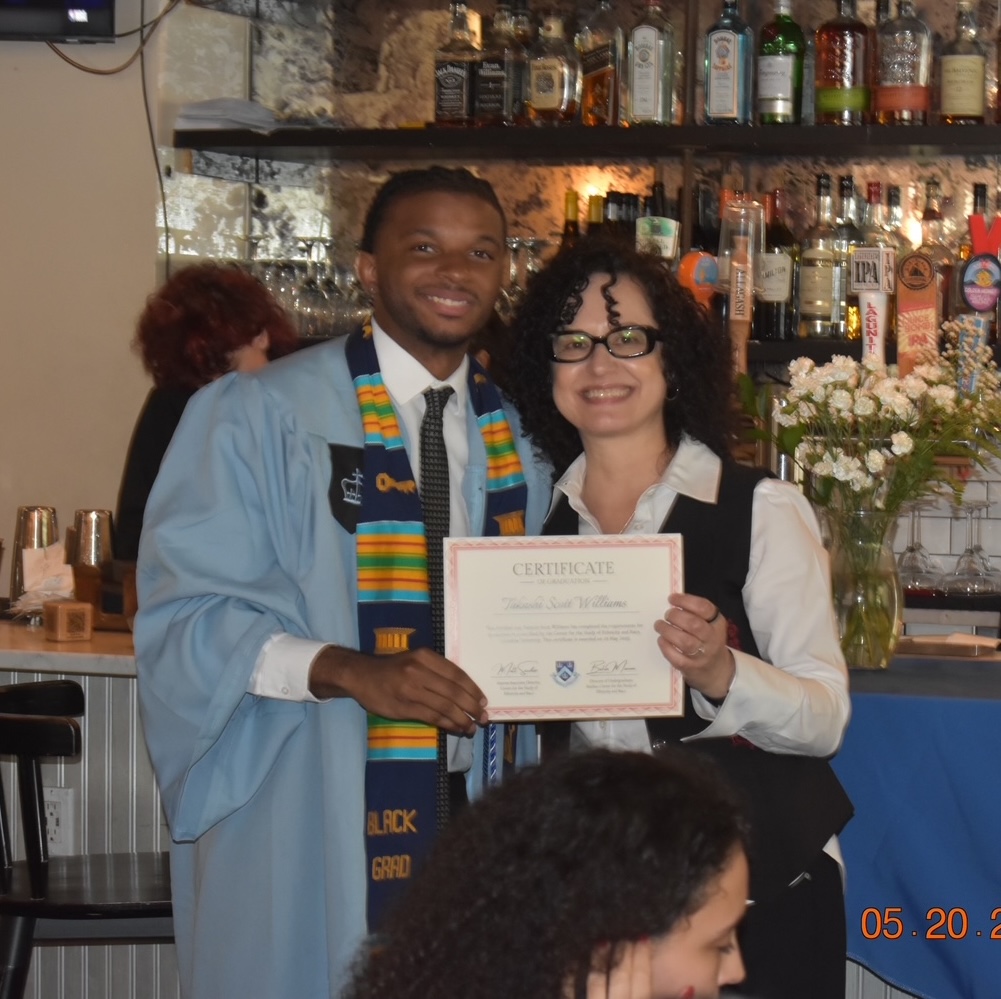
Takashi Williams, BA in Ethnicity and Race Studies/English Language and Literature (CC ’25)
Takashi is a recent graduate of CSER’s undergraduate program in Ethnicity and Race Studies! Post-grad, he works as a journalist at the intersection of sports and current events/race relations. While at Columbia, Takashi worked as a research assistant CSER and wrote for the Columbia Daily Spectator. Takashi was also the recipient of the CSER Award for Outstanding Thesis for his project on misogynoir on the women’s tennis circuit. Read Takashi’s articles on The Nation and Sports Illustrated here!
We asked Takashi some questions about his time as a CSER student. Read his answers below!
Can you describe how you first became involved with CSER?
Shoutout Dr. Shana Redmond! I came into Columbia with eyes definitely on Ethnicity and Race studies, but went through that two-year period of being undecided like most students. I was taking intro courses for majors from Political Science to History to African American Studies. But, after taking Dr. Shana Redmond’s Intro to Comparative Ethnic Studies course, there was no doubt in my mind I would be a CSER student. I felt validated by her beliefs regarding just how prevalent capitalism is in our everyday surroundings. That class also welcomed me into my second dorm for the following two years: the CSER office. I’ll never forget how kind and sweet staff and faculty were to me as a young, little sophomore. It reminded me of the kind and loving women I grew up around in my life, and made declaring CSER as a major a no-brainer.
What does the study of ethnicity and race (ethnic studies) mean to you?
It means so much. It’s the backbone of the journalism I currently find myself doing, but also provides so much perspective on how I interact with the world. It assuaged that conservative voice of not making everything about race, and helped me come to terms with the fact that it is a poignant lens in which you can understand your surroundings and the places you inhabit. And that is completely valid.
What was your CSER thesis on? Why did you select this topic?
I explored misogynoir on the women’s tennis circuit. So going from the mid-20th century and learning about the experiences of Althea Gibson to the present day and celebrating strong figures such as Serena and Venus Williams, Naomi Osaka and Coco Gauff.
I selected it because a lot of the work I do is around race and sports, so it was a fitting way to conclude my time at CSER. But also, Black women in tennis is a deeply personal subject for me. My mother, Professor Mavis Fowler-Williams, ushered her love of the sport to me since before I could even walk. It came with life-long memories of watching Serena Williams hoist US Open titles in-person. It also came with an indescribable pain of watching Serena endure abuse as a Black woman, understand why it was taking place, but not have any figures in the media either able to address it or have the education to.
So this thesis was almost therapeutic in a way actually. It was a gift to that young boy—and most importantly my mother–for all the times we were disappointed in how a sport viewed and treated us, no matter how much we loved it back.
What has been a highlight of your time with CSER?
So many…not even just saying that. I can truthfully say that CSER made my time at Columbia exponentially more rewarding. But one of the many highlights I would say was taking Professor Bahia Munem’s War, Gender, and Migration course. To label it as a “course” does it a grave disjustice. It was so much more.
During a time where there was so much tension on campus and fear. A time where students were critiqued for doing what we were supposed to: question and share our thoughts. Dr. Munem provided a space for us to be students again on a campus engulfed by fear that we would be seen as delinquents or hate mongers for not completely falling in line with a certain agenda or political ideology.
I learned a lot and I felt a lot, all while being taught by a professor who bared their heart on their sleeve the entire semester. Don’t know what more a student could ask for.
What do you do in your free time?
Read a good book. Watch a good tv show or movie. Organize my Pokémon card collection.
Do you maintain any creative or political practices outside of Columbia which resonate with your studies?
All my freelance journalism at the moment for sure. Of course, some outlets I am not able to incorporate race or politics into my pieces as much as I’d like. But recently, articles I’ve written for The Nation and Tennis Channel shined a light on the Black athlete experience. Hope I can continue to push that needle for many more years to come!
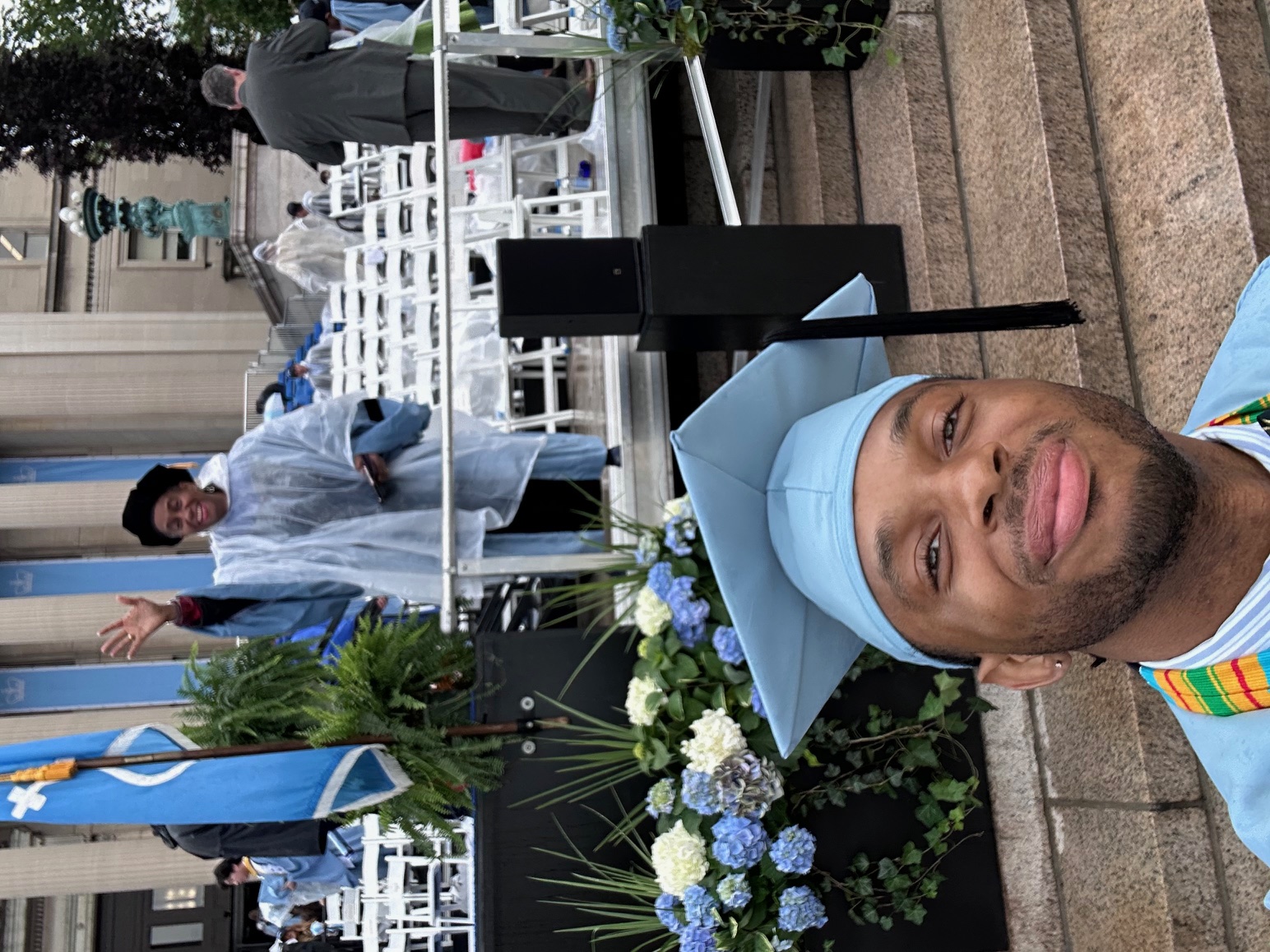
Takashi with his mom, Professor Mavis Fowler-William, at Columbia commencement
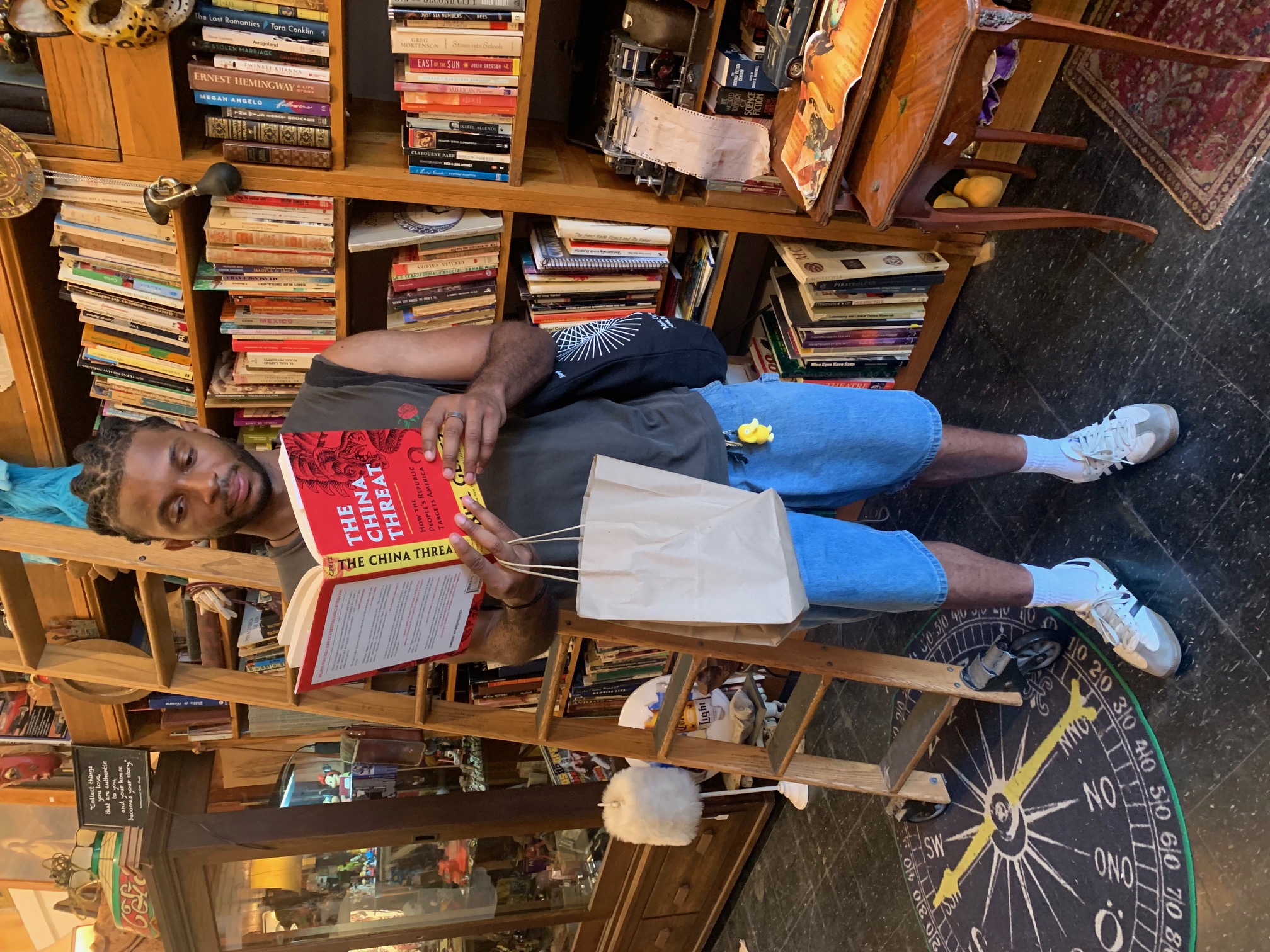
Takashi reading up on current events