
Recirculation Books
876 Riverside Drive
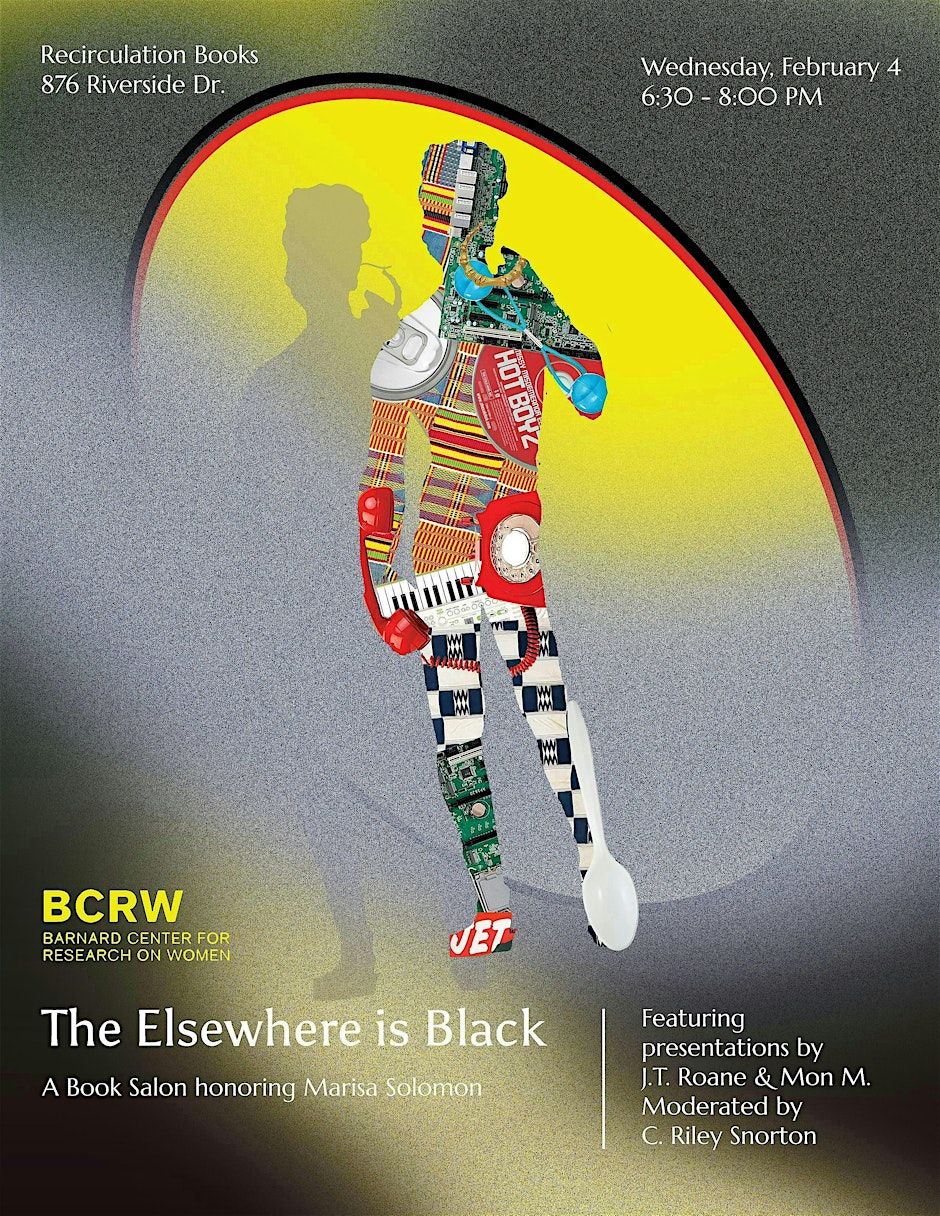
The Barnard Center for Research on Women presents: The Elsewhere Is Black: Ecological Violence and Improvised Life, a reading and discussion featuring Marisa Solomon, J.T. Roane, Mon Mohapatra, and C. Riley Snorton. Co-Sponsors: The Department of Women’s, Gender, and Sexuality Studies, Barnard College
Join BCRW for an exciting book salon in celebration of Barnard Assistant Professor of Women’s, Gender, Sexuality Studies Marisa Solomon’s The Elsewhere Is Black: Ecological Violence and Improvised Life with J.T. Roane (Geography, Rutgers) and Mon Mohapatra (Community Justice Exchange), moderated by C. Riley Snorton (English & Comparative Literature and ISSG, Columbia).
In The Elsewhere Is Black, Solomon examines how waste is a mundane part of poor Black survival and a condition of settler colonial racial capitalism. Tracing the flow of trash and waste across Black spaces, from Brooklyn’s historically Black Bedford-Stuyvesant to the post-plantation towns of Virginia’s Tidewater, Solomon contends that waste infrastructures concentrate environmental risk in an elsewhere that is routinely Black. She theorizes the relationship between the devaluation of land and Black and more-than-human life to reveal how the risks of poisoning, police violence, dispossession, and poverty hold Black life captive. Highlighting the creativity and resilience that emerge amid these conditions, Solomon, Roane, and Monhapatra will invite us to consider collaborative conversations across new eco-political possibilities that center the book’s fundamental ask: What forms of environmentalism arise when Black un/freedom has always been entangled with waste?